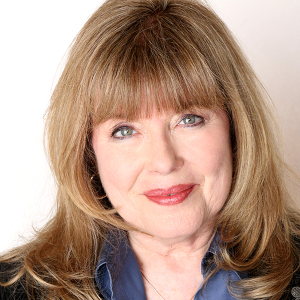
On this Special Edition of The Anderson Files, Mike’s guest is Georgia Jeffries, author of the recently released historical fiction novel, The Younger Girl, a true crime story of family betrayal, inheritance theft, and multi-generational trauma. Listen to the author as she takes us through what inspired the novel and the many paths she pursued to bring us this gripping story based on events from her own family history.
Honored with multiple Writers Guild Awards, Golden Globes, and the Humanitas Prize, Georgia’s work in film has been praised by the Los Angeles Times as “standing ovation television.” Her resume includes many docudramas and series plots for CBS, ABC, NBC, HBO and Showtime, short stories that have appeared in several national suspense anthologies and biography and historical profiles.
Georgia is a graduate of the University of California, Los Angeles and is a professor at the University of Southern California School of Cinematic Arts.
The Younger Girl can be purchased at your favorite bookstore as well as Amazon. You can contact Georgia through her author’s website at www.georgiajeffries.com.
Subscribe to The Anderson Files on Podclips.io. The Anderson Files is also streaming on Apple iTunes, Spotify, Google Podcasts, Amazon Audible, iHeart, and Pandora.
WWW.PODCLIPS.IO – Premium Podcasts for the 21st Century
Listen to an episode and enjoy your favorite morning beverage with The Anderson Files mug, which can be purchased by emailing us at [email protected].
For more great content on PodClips.io, check out Fred and the Fantastics on our Sports Channel!
This is The Anderson Files on PodClips. The Anderson Files is a look at commerce, investment, economics, and retirement issues that affect each and every one of you. Your host is Mike Anderson, Executive Vice President of the Warner Companies, a Foundation Risk Partners Company. The Warner Companies is a registered investment advisor, with securities offered through M. Holding Security Incorporated, member of FINRA and SIPC. And now your host, friend, and colleague, Mike Anderson.
My guest today is Georgia Jeffries, author of the recently released historical fiction novel The Younger Girl. Georgia Jeffries is a writer of Emmy Award-winning drama and acclaimed noir fiction, honored with multiple Writers Guild Awards, Golden Globes, and the Humanitas Prize. Her work in film has been praised by the Los Angeles Times as “standing ovation television.” Her short stories have appeared in national suspense anthologies, including Mystery Writers of America’s Odd Partners and Sisters in Crime, The Last Resort. A cum laude UCLA graduate, Jeffries is a professor at the USC School of Cinematic Arts, where she created the first BFA Television Thesis program at an American University. Georgia, welcome to the program.
Thank you so much for having me, Mike. I’m delighted to be here.
Thank you. And to get started with your current novel, how did you create the idea for the book, for this historical fiction novel?
The very beginning was in my childhood. Of course, I had no idea it would be a novel at the time, but let’s say the seed was planted when I was nine years old. And being a very curious child, I was exploring my parents’ photo albums and digging into a box of pictures that had not been put into the album. And underneath that box of pictures, I discovered some yellowed newspaper headlines from Chicago, dated in 1933 and Scotch-taped on cardboard. And I thought, Oh, this is so interesting, what is this about? And the headline was, “Heiress Slain, Married Man Held,” and a picture of a beautiful young woman on the front page in a cloche hat and fur coat. I immediately asked my mother when she came in and saw what I was doing, What is this all about? And she said, Oh, well, that was your father’s older sister, she died in an accident. Let’s put that away now.
And you were nine.
And I was nine, and I was, as I said, always a curious child, and I was definitely delving into family secrets that were not discussed at the time. I did catch up with my dad about it when he came home for supper, and he did not want to talk about any of it. A few years later, my mother died, and my father was more able to speak more about his family childhood and the hardships there. And the loss of his beloved older sister, who was murdered when she was 20 years old, and he was only 12.
So that was when the seed was planted. When did I know I would actually create a novel from it? It emerged during my years of screenwriting and producing, and also writing my first novel, and then a second novel that was inspired by an HBO script of mine as well. And in the meantime, I was doing very gradual research about what had occurred with this scandalous murder that had so affected my father as a child and our family. And in 1996, I took my father back to the small town where he was raised, Pontiac, Illinois, for a family reunion. He had not been back for over 40 years, and he actually walked me through the events that occurred when they had, the tragedy unfolded with his sister, and I visited the courthouse where the court transcripts were. A local man, the son of the mayor, had actually been convicted of her killing, but some months later, his conviction had been overturned on a technicality by the Illinois Supreme Court.
So that was the point where I decided I need to follow the money and do more investigation on this. And so, over a period of a decade, trips back to Illinois, a lot of deep research, oral history, and the story in my mind, the curiosity, was put on the page. And I made it, I guess I made it a labor of love to try to find out what the truth was about her killing, and not just that crime, but what I soon discovered was the theft and the embezzlement of her inheritance, which had occurred just a year before she was killed.
When you started the research, and you were really digging into it, was it one surprise after another? Or more confirmation of what you thought, what your dad had, to the extent of what he was able to share with you? How did that unfold?
It was its own unfolding mystery. And I was living it as I was doing the research and trying to discern the facts that I was picking up from the oral history, what I was doing, because it was remarkable how many people still remembered “the accident,” as they called it, in this small, pristine midwestern town. But there were people still alive when I started the research, who knew her and remembered her, and it left quite an impression in town. My father did indicate very shortly before he died that his mother suspected the involvement of his uncle in the theft of my teenage aunt’s inheritance. And after exploring many property records and transcripts as well, let me just say that I found some evidence that did link a family member. So I don’t want to give away the story, but,
Of course.
But it actually, and I’ll call it, I felt a responsibility to write the story and an opportunity as a writer because I framed the story both from two points of view, from the present of 1996 and the adult daughter who took her father back to find the truth, which is based very much on the facts of the experience with my dad. And I created the diary of my young teenage aunt, which was all in my writer’s mind, but inspired by much of that oral history. And it unfolds during the last six years of her life, from 12 to 20, and so from the late ’20s to 1930s. So it’s really the story of two women who want to find justice for crimes that have been created. Aldine Younger, the inspiration for the title, The Younger Girl, and the theft of her inheritance, and Joanna, the stand-in for me, and the man, my father, and Aldine’s older brother, who connected us both. So it is a novel. I mean, there’s much that I have created and heightened. People have asked me, readers have said, Oh, oh, the diary is so fascinating. Where did you find it? And I said, Well, it’s in my mind, but it’s inspired by actual incidents that I had learned, and then, of course, fictionalized and dramatized.
So it really was a joy to write. In part, there was a great deal of historical information I had to sort through. That was the biggest challenge to put it in proper order. But I would say that the joy was in the writing, in the first person of my aunt, whom, of course, I never knew. She died over 20 years before I was born.
You are listening to The Anderson Files on Podclips.io, and my guest today is Georgia Jeffries. Is this type of story new to your writing? Have you really done anything similar to this in the past, or is this, in part, new ground as a writer for you?
All of my writing, even for scripts, was always inspired by a good deal of research. I mean, from riding shotgun, you know, with sergeants at an overnight patrol, to visiting Walter Reed Army Hospital and being able to observe in the surgery bay for an ABC pilot I was writing. I even went to Las Vegas and attended a bounty hunter’s convention when I was working on another NBC pilot, which was really fascinating. And I got that special invitation from a bounty hunter who I’d hired to help me with the research.
Those were probably interesting breakout sessions that they had.
Oh, very interesting, fascinating. It allowed me to step into another world and then to put it on the page as well, which I considered a great opportunity and certainly widened my perspective. So research is integral, really, to everything I write. Research also inspires me in terms of character, relationships, conflicts, scenes. But, I would say, yes, this is the first piece of literary historical fiction that I have done. My next book, which I’m polishing now, is also inspired by a true-life crime called L.A.’s Mr. Goodbar Murder, which occurred, happened, in the 1980s in Los Angeles. And I guess, at least for the Z generation, the 1980s are considered historical fiction now, right?
Yeah, in today’s world, it would be considered historical, right? Even though it’s not that long ago. Yes,
Not that long ago, for some of us it seems, right? But like The Younger Girl, place is very much a character. The small town in Illinois is really one of the major characters in the story. In the current novel that I’m finishing now, Angels in the Snow, Los Angeles is the main character, and Los Angeles in the 1980s. Because I think the era in which I’m writing is as much a character as place, and the individual men and women that I’m writing about. And in The Younger Girl, as I delved into more of the research, it was enlightening to see how much Aldine Younger was actually a young woman of her time. I mean, she definitely came of age as a young flapper. And she was pushing boundaries as a very young girl, and I think she was quite a free spirit. And in her way, which was always, let’s say, might have been very novel for small-town America in the 1930s, so she was a fascinating character to write about. And I do like writing about people who, perhaps, are ahead of their time or challenging some of the assumptions of their time. Yeah.
As you’re sharing the genesis of the story, the book, additionally running through my mind, I don’t know if I ever shared this with you, but my grandfather, my dad’s dad, he disappeared in a suburb of Seattle in March of 1938,
Oh my gosh.
And that’s been the enigma in our family. And my dad was nine years old at the time.
Oh, interesting. Nine years old, a pivotal age for both of our families.
Nine years old, yes. And he was nine, my aunt was five, six years old, and seven, eight years ago, we, my wife and I, we started really trying to find anything regarding it. And I consulted a PI on what strings do you follow? And he said, You know, try to get as close to the date, time, and place of when it happened. So he said, you know, newspaper clippings and police records, and just to share one little thing about it, specifically, that I’m still floored about. So we contacted the sheriff’s department that would have been called the day that he disappeared. And the sheriff was very kind, and he said, You know, the records from that time don’t exist anymore. But there’s someone in the area that does research for us who goes all the way back to that time; she might be able to help you. So we contacted her. She was in her 90s.
Yes.
She does research for the police department.
Yes.
This is the linchpin. We’re describing the situation to her, and she said, You know what? I remember this. When, when she was a girl, her father was the sheriff that was called that day,
Oh my goodness.
When it was reported that my grandfather disappeared. She picked the phone up,
Oh, that’s extraordinary.
And said, OK, my dad will be there, you know? And so, it, and she subsequently has done a number of things for us. But here was someone, she was just a little girl, she picked the phone up, Yeah, my dad will be there. And, so, I just wanted to share that we have that, an enigma in our family as well. And I’ll share more of it, with what we have found out later, but at least that piece of it I wanted to share with you today.
It’s a wonderful story. Thank you for sharing it, and I find it very moving. And I also, the fact that she had picked up the phone, that’s what I would call, not coincidence, but a moment of synchronicity, which is like this kind of indescribable moment where sometimes the past, the present, the future kind of intersect. And which really inspired some, some magical realism themes in The Younger Girl. But I will tell you, when I was in Pontiac with my dad, we were walking down the street, passing a barber shop, still there that he had gone to as a, as a child. And sitting in the barber chair, he recognized a man that was actually the son of the lawyer who was defending Asher Bentley, who was the killer of my aunt. He recognized him. This is like decades, decades later.
Amazing.
He had not seen him since he’d left the small town when he was a very young man. What are the odds? I mean, that moment in time,
Gosh.
And you can’t just put it down to, oh, well, that was a small town, or just happened to call at the right time. I think it’s really those are wondrous moments, and, and to me, I interpret that as really the inspiration, the purpose. There is a purpose behind, behind these searches, behind these family searches. And I think, yeah, we all have family secrets and wounds from the past. And the more the present, you know, we in the, in the present, we can unfold these and come across these revelations, I think healing is possible, some form of healing, right?
I agree.
Yeah, when, when I, when at my signings, I sign my book for people, I say, May you find your own family story. You know, we all have them, but, but Mike, this is fascinating, all the years we’ve known each other, and you do, you have your own enigma. And I’m very curious to see how that unfolds for you. Your dad’s still alive, Mike?
Yeah, he, he passed away three years ago. Subsequently, a number of key pieces of information create a profile of what actually happened, and I’ll share that with you offline, I’ll share that with you.
But he knew you were doing the search?
And he knew about the, the woman that we were referring to from the sheriff’s department,
The little girl calling your sheriff to the phone,
And so he knew that part of it. Much has unfolded subsequently. If we were able to share what we have subsequently found, I think it would have been kind of settling to him, as to, as he’s gone through his, you know, went through his whole life, of course, you know, wondering,
Why did his dad leave, or what happened? What terrible thing could have happened? All of that. And so my dad died three months after our trip to Illinois; it was almost like we were able to walk through the events. I was able to witness so much of what he had shared with his family, and then he moved on, you know? So, of course, he never saw the book or subsequent research, and so on. But I was asked at a reading, Do you think your father would have been proud of this book, because it’s also very much about my relationship with my father as he was going through his hard drinking, grieving years, you know, dealing with family hardship from his childhood. And I just say, Yes, we’re carrying on, it’s so good for our family, we’re carrying on. Yeah.
I’m speaking with Georgia Jeffries, and this is The Anderson Files on Podclips.io. Georgia, with the few minutes that we have left, the research that you ended up doing, did it end up taking you to several states and counties?
It was all really in central Illinois because my family on my father’s side had lived there for several generations. What was interesting, though that wasn’t in the forefront of my mind, is that my father was a first-generation American on his father’s side, who was an immigrant from Wales, and second-generation on his mother’s side, whose family had come from Germany. And, you know, sometimes, as you delve into specifics, it takes you to the universal. And I think, you know, here we are in America, so how many family members have come through the years and centuries? And I see in learning about my family and how they became a force in that community, eventually. They were striving to be accepted as Americans because it was the land of their dreams. So, but it was all centered in this little town in midwestern Illinois. Yeah, in the heartland, in the heartland.
Amazing. As we wrap, is there anything in addition that you’d like to share regarding how the book was created, the writing, your inspiration for sharing it with everyone?
Well, I’ll say it was a long journey, it was a long journey, and it was not a commercial journey for me. I was being paid to, in the early years of my research, of course, as a working screenwriter, producer, and then a professor at USC. And so what was keeping me going was, I guess, just the deep, intuitive knowledge that this story needed to be told. Not just for me and my family, but for other people who would read it and perhaps be inspired by it.
Beautiful, absolutely beautiful. Where can our listeners purchase The Younger Girl?
Oh, thank you for asking. Well, first of all, at your favorite bookstore, because it’s distributed by Ingram, which is, as we all know, the largest distribution system in the world, so go to your local bookstore. Vroman’s in Pasadena, Diesel, Barnes & Noble, of course. I had a great reading there a couple of months ago. And of course, Amazon, on Amazon.
Yes.
Yes, support your local bookstores, and the great behemoth Amazon will be happy to sell it to you. And it’s now in paperback, so it’s a good buy. Thank you for asking.
Excellent, excellent. And if listeners would like to contact you, what would be the best way for them to, or preferred way, for them to contact you?
Oh, sure. My author website is georgiajeffries.com. I do have my own website, and please contact me through that. Anybody who’s interested in questions about the book, book club appearances, happy to connect with all of my readers.
Beautiful. Georgia, we wish you great success with the new novel. And, as you shared with everyone, that another one is on the way, so we look forward to that as well.
Thank you so much.
We look forward to it.
Thank you so much.
Thank you, Darrell Wayne, recording engineer; Mark Alyn, producer. I’m Mike Anderson, and you’re listening to The Anderson Files on Podclips.io. Keep calm and keep listening.
You’ve been listening to The Anderson Files with Mike Anderson. Visit us at Podclips.io and check on the Financial Channel for more episodes and information on The Anderson Files.